
Zoho Mail Tasks helps you organise daily responsibilities, manage deadlines, and keep track of work without relying on separate to-do lists. You can create tasks, assign responsibilities, set priorities, and monitor progress from a central workspace.
Zoho Mail supports Personal Tasks for individual work and Group Tasks for team collaboration. Features such as subtasks, recurring schedules, reminders, and task categories help you organise work according to your requirements.
Tasks: Overview
Personal tasks
Personal Tasks are designed for managing individual responsibilities and keeping your daily work organised. You can create tasks for activities such as preparing reports, following up with clients, reviewing documents, or completing administrative work.
When creating a personal task, you can specify the assignee, start date, due date, priority, and other relevant details. This helps you plan your workload, identify upcoming deadlines, and keep track of unfinished responsibilities.
Personal Tasks can also be assigned to other users where required, making them useful for managing individual work without creating a shared group task.

All your Personal tasks can be found by clicking the Personal tasks view in the left pane.

You can assign your personal task to any organization member.

Ideally, Personal tasks are only visible and accessible to you and the assignee of each respective tasks. However, if you want your colleagues to engage in any of your Personal tasks, you can use the Add invitees feature available for each task. This will give the invitees access to view, like, and comment on your personal task.

Group Tasks
Group Tasks help teams manage shared responsibilities within a common workspace. Instead of coordinating every activity through separate email conversations, team members can access relevant tasks, discuss requirements, and follow updates in one place.
For example, a marketing team preparing a campaign can create separate tasks for content creation, design, publishing, and performance analysis. Each task can be assigned to the appropriate person, helping the team understand who is responsible for each activity.
Group Tasks are particularly useful for coordinating projects, tracking deliverables, and maintaining visibility into ongoing work.

Know more about Group tasks
Group Tasks offer collaboration features that help teams coordinate their work while maintaining appropriate access permissions.
Group members can view tasks, add comments, and follow task-related discussions. You can also invite eligible organisation members who are not part of the group to participate in a specific task, subject to the applicable permissions.
Tasks can be moved or copied between groups where supported, making it easier to reorganise work when project responsibilities change. When moving a task, you may also have the option to include its comments.
These features help teams keep discussions connected to the relevant task and reduce confusion when multiple people contribute to the same deliverable.
Subtasks
Large tasks often involve several activities that need to be completed in a particular order or by different people. Subtasks in Zoho Mail allow you to break a parent task into smaller, manageable components.
For example, a task titled Publish a Blog Article could include subtasks for keyword research, drafting, editing, image preparation, and publishing. Each subtask can have its own assignee and relevant details, making individual responsibilities easier to track.
Subtasks help you organise complex work, distribute responsibilities, and monitor progress without losing sight of the overall objective. They are useful for both personal planning and collaborative projects.

-
You can add Subtasks in both Personal and Group tasks.
-
You can assign a separate user as an assignee for each subtask. The assignee can be any member of your organization and is not limited to only group members in case of Group tasks or you in case of Personal tasks.
-
In case of a group task, if the subtask assignee is part of the group, they can edit the subtask—set priority, due date, add description, among others.
Recurring tasks
Recurring Tasks help you manage activities that must be completed repeatedly, such as preparing weekly reports, conducting monthly reviews, or completing regular administrative checks.
Instead of creating the same task every time it becomes due, you can configure a recurrence schedule in Zoho Mail. Supported recurrence options include daily, weekly, monthly, and yearly patterns, with additional scheduling options where available.
When setting up a recurring task, define the task details, assignee, schedule, and other relevant information. This makes routine work easier to organise and reduces the effort involved in manually recreating tasks.

Tasks: Essentials
Collaborate in tasks
Effective collaboration requires more than assigning work. Team members also need a place to discuss requirements, share updates, and clarify responsibilities.
Zoho Mail allows users to invite colleagues to tasks and exchange information through comments. Invited users can view and comment on the task according to their permissions, while editing rights depend on their role and access level.
Keeping discussions within the task helps preserve context and makes it easier for participants to understand decisions, follow updates, and coordinate their next steps.
Category
Categories help you organise tasks into folders based on projects, departments, or work areas. For example, a team could create categories for Content Marketing, Customer Support, and Internal Operations to keep related responsibilities organised.
You can create categories under Personal Tasks or within individual groups. Each category belongs to its respective task area, helping maintain a clear structure for different sets of responsibilities.
Using meaningful categories makes it easier to locate related tasks and manage large task lists without creating unnecessary clutter.


For example, say you are working on two different projects—traditional marketing and online marketing, under a Group named Marketing. To have a clear separation of tasks, you can create two categories and associate the respective tasks with them.
Labels or Tags
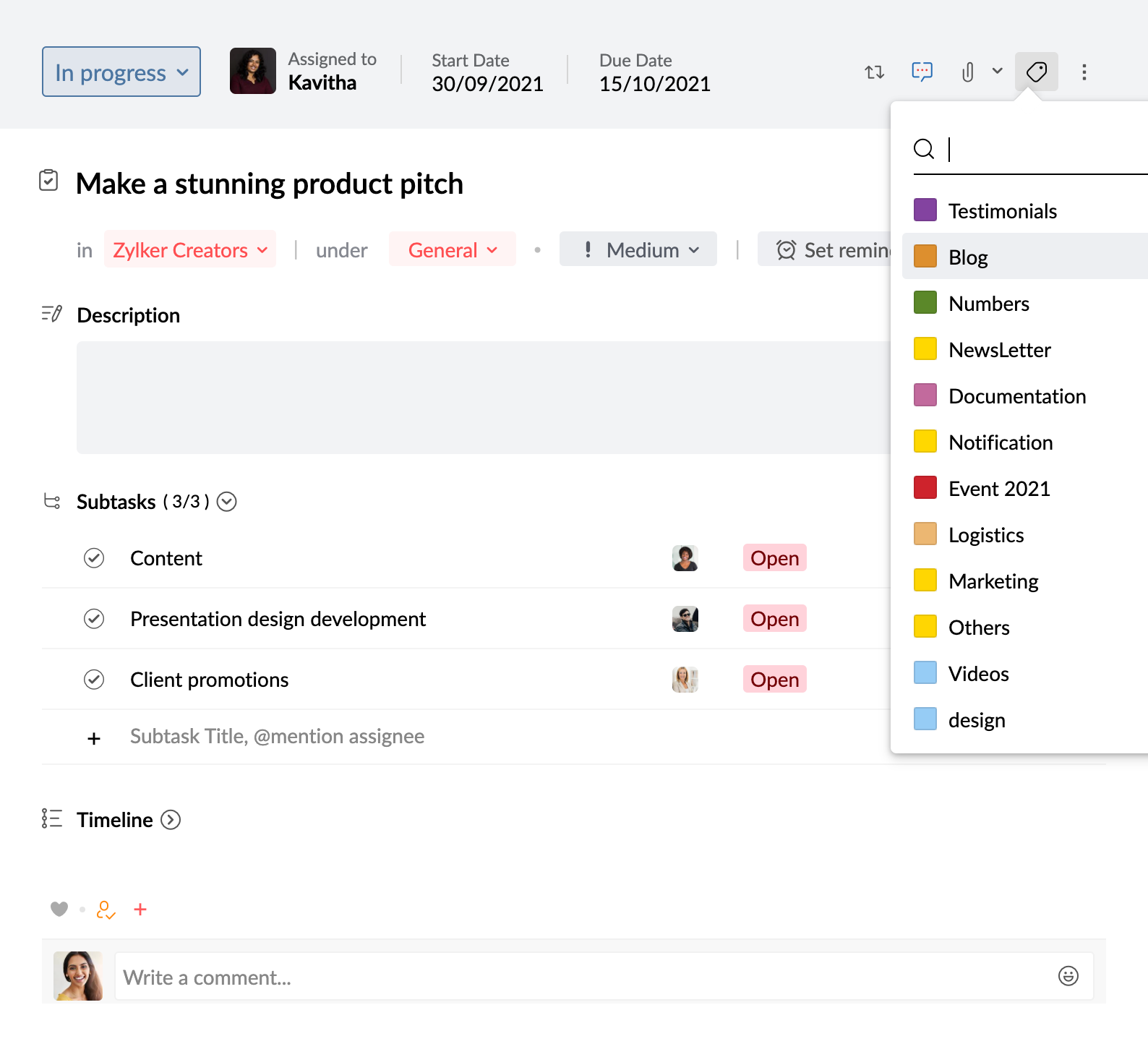
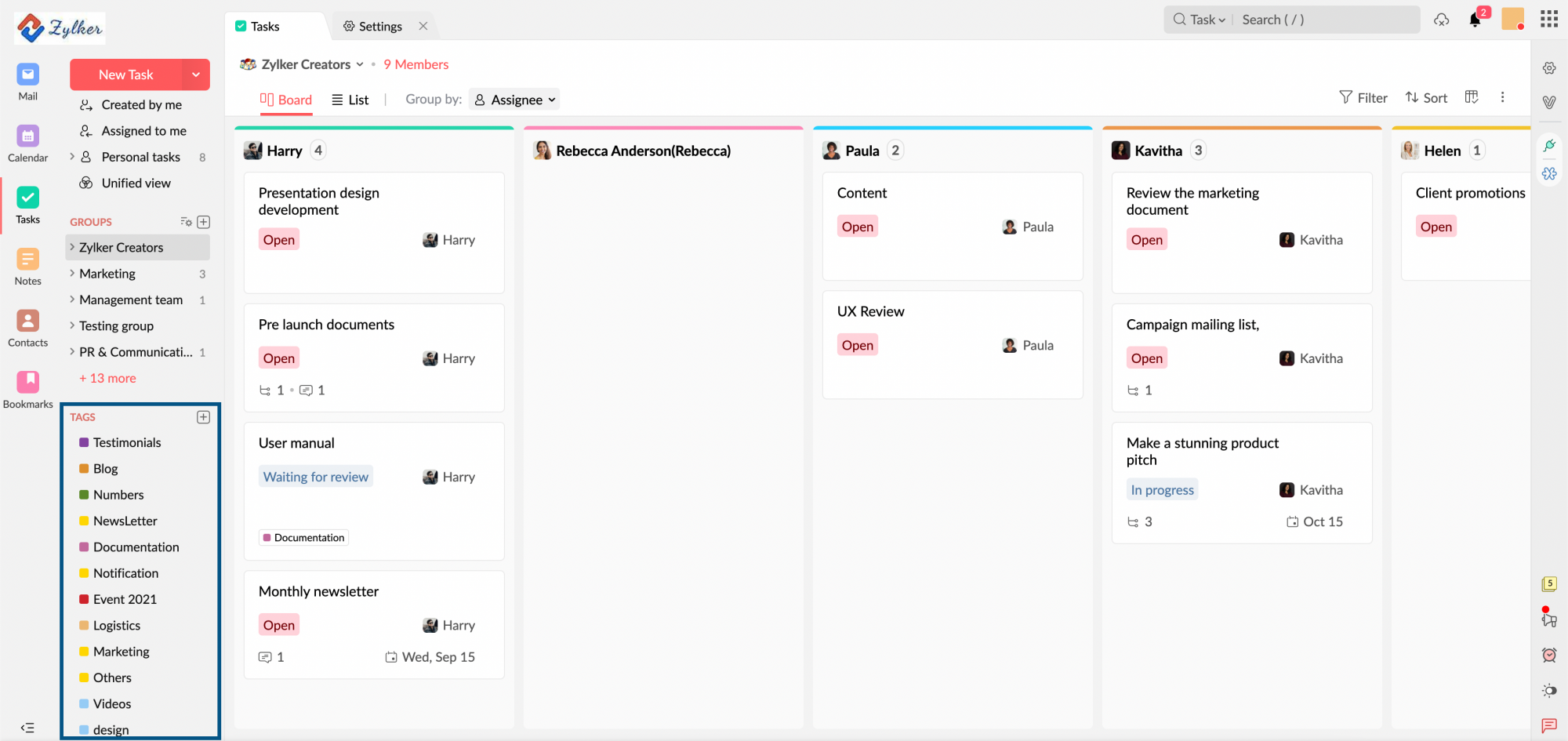
Labels, also called Tags, help you identify tasks according to their nature, purpose, or requirements. Examples include Research, Review, Urgent, and Follow-up.
Unlike categories, labels can be used across different task areas. You can also apply multiple labels to a task and use colours to distinguish them visually.
For example, a task in the Content Marketing category could carry the labels Research and Review. This allows you to identify both the work area and the specific characteristics of the task.
Category vs Labels
Categories and labels serve different purposes in Zoho Mail Tasks. Categories organise tasks into folders, while labels identify tasks by their characteristics.
| Feature | Category | Labels or Tags |
| Purpose | Organises tasks by work area | Identifies task characteristics |
| Structure | Folder-based organisation | Flexible tagging |
| Usage | One category per task | Multiple labels per task |
| Scope | Personal Tasks or a specific group | Can be used across task areas |
| Example | Content Marketing | Research, Urgent, Review |
Priority
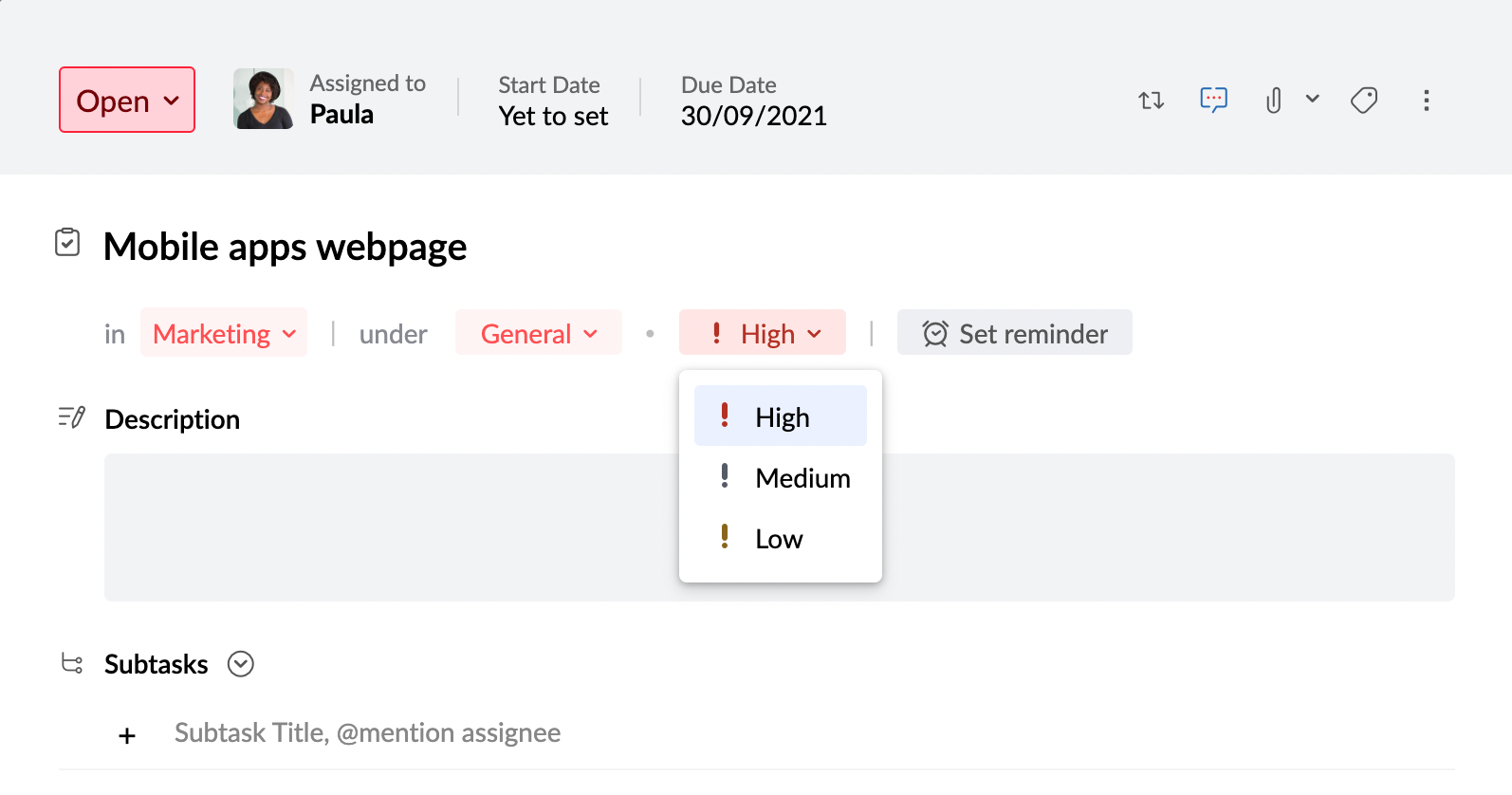
Task Priority helps you determine which responsibilities require attention first. Zoho Mail provides three priority levels: High, Medium, and Low.
High priority is suitable for urgent or critical work, Medium for tasks that require timely completion, and Low for activities that can be handled after more pressing responsibilities.
Assigning priorities helps you organise your workload when several tasks compete for your attention. For the best results, consider priority alongside the due date so that important work is completed within the required timeframe.
Task Status
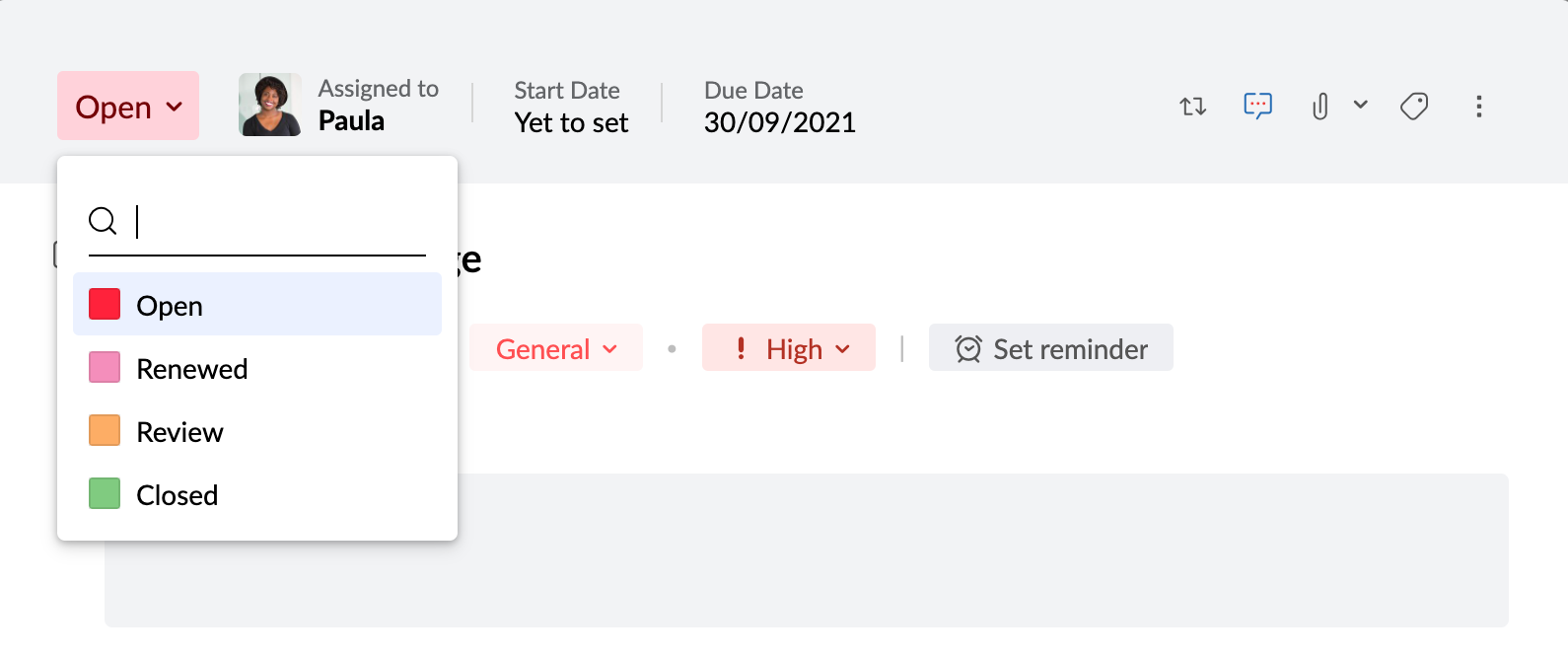
Task Status indicates the current state of a task. Zoho Mail provides Open and Closed as default statuses, with custom statuses available where supported.
Open tasks represent work that remains outstanding, while Closed tasks indicate completed work. Teams can use custom statuses, such as In Progress or Under Review, to reflect their working process where the feature is available.
Consistent status management helps users distinguish pending responsibilities from completed activities and identify tasks that require further attention.
Start Date
The Start Date indicates when work on a task is intended to begin. It helps you plan activities in advance and coordinate tasks that form part of a larger project.
For example, if a report is due at the end of the month, you can set an earlier start date to allow sufficient time for research, preparation, and review.
Using start dates alongside priorities and due dates helps create a more realistic work schedule and prevents tasks from being treated as immediate responsibilities when they are not yet due to begin.
Due Date
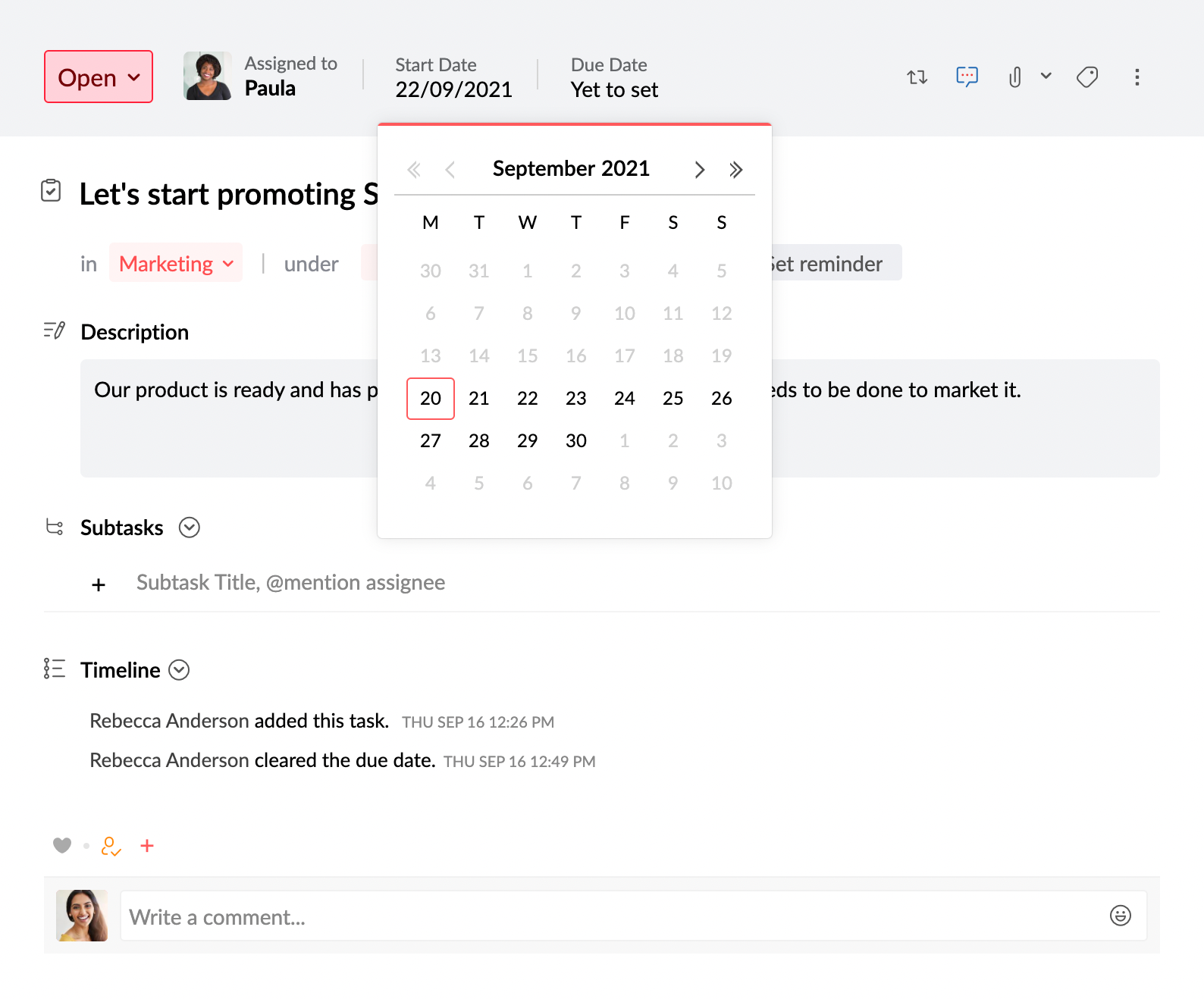
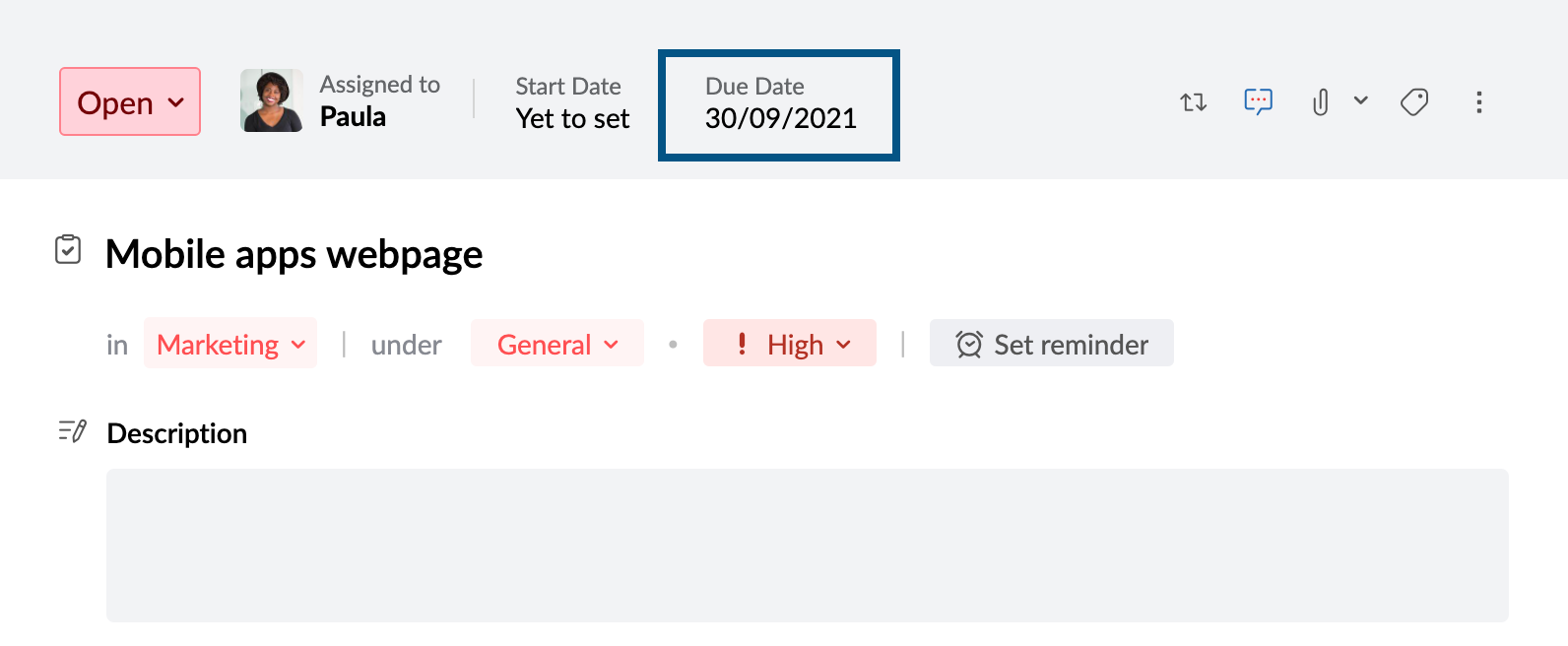
The Due Date specifies when a task should be completed. Setting deadlines helps establish clear expectations and makes it easier to identify upcoming and overdue responsibilities.
For example, a task involving a client presentation may have a fixed due date that allows enough time for preparation and review before the meeting.
Zoho Mail also supports overdue notifications for tasks with due dates. Reviewing deadlines regularly helps you plan your workload, avoid last-minute delays, and keep important commitments on track.
Reminders
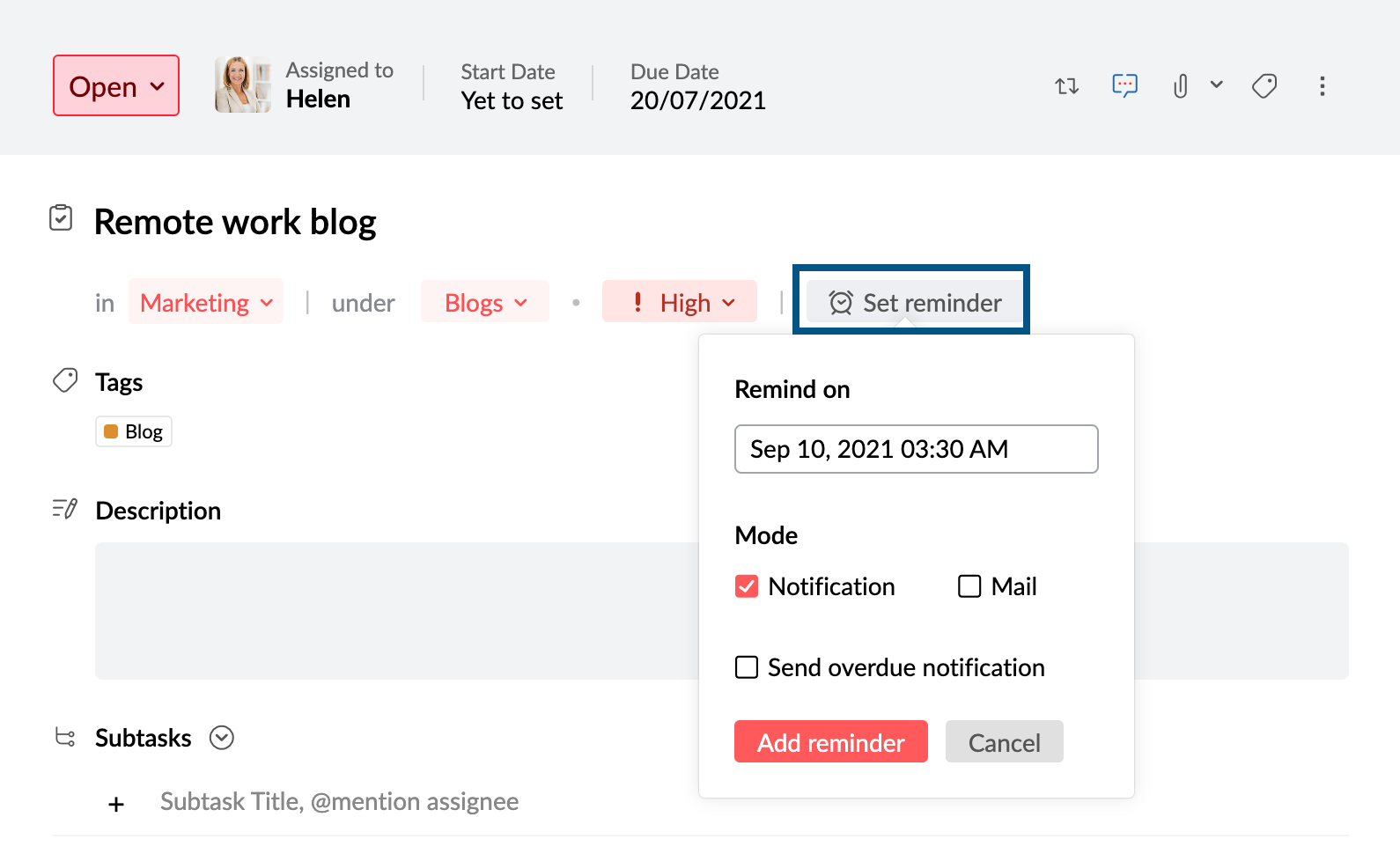
Reminders help you stay aware of upcoming tasks and deadlines without having to check your task list constantly. Zoho Mail allows you to configure the reminder date and time and choose to receive a notification, an email, or both.
You can also enable overdue notifications for tasks with due dates. These reminders are useful for meetings, submissions, follow-ups, and other responsibilities that require timely action.
Setting reminders in advance gives you time to prepare rather than simply notifying you when a deadline is approaching. Choose reminder timings according to the urgency and preparation required for each task.
Task Description
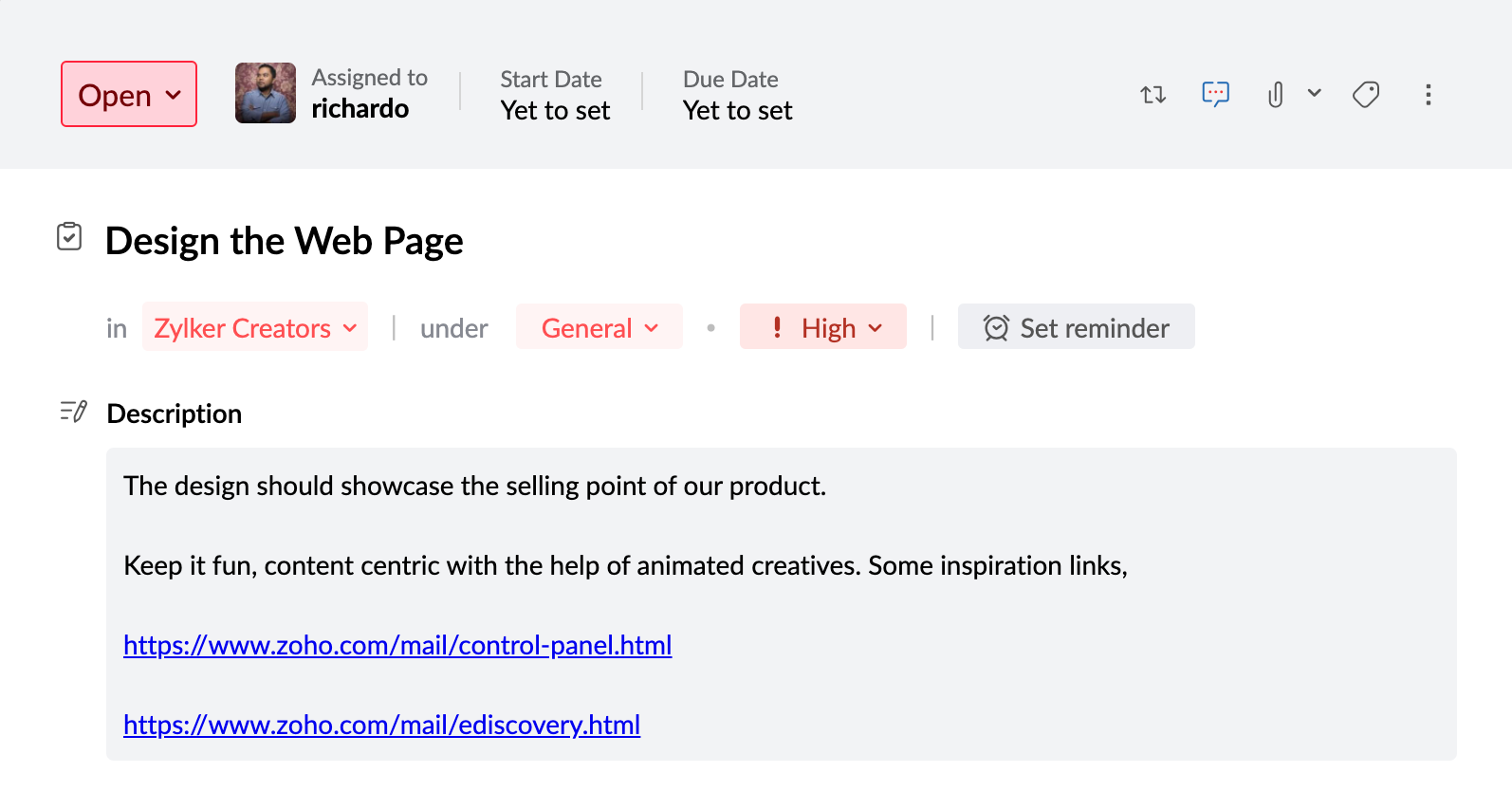
The Task Description provides the information needed to understand and complete a task. While the title identifies the responsibility, the description explains what needs to be done and what the expected outcome should be.
For example, a task titled Prepare Monthly Sales Report could include the reporting period, data sources, required format, and submission instructions.
Clear descriptions reduce ambiguity, minimise repeated clarification, and help assignees work more independently. Include the relevant instructions, requirements, and reference links needed to complete the task effectively.
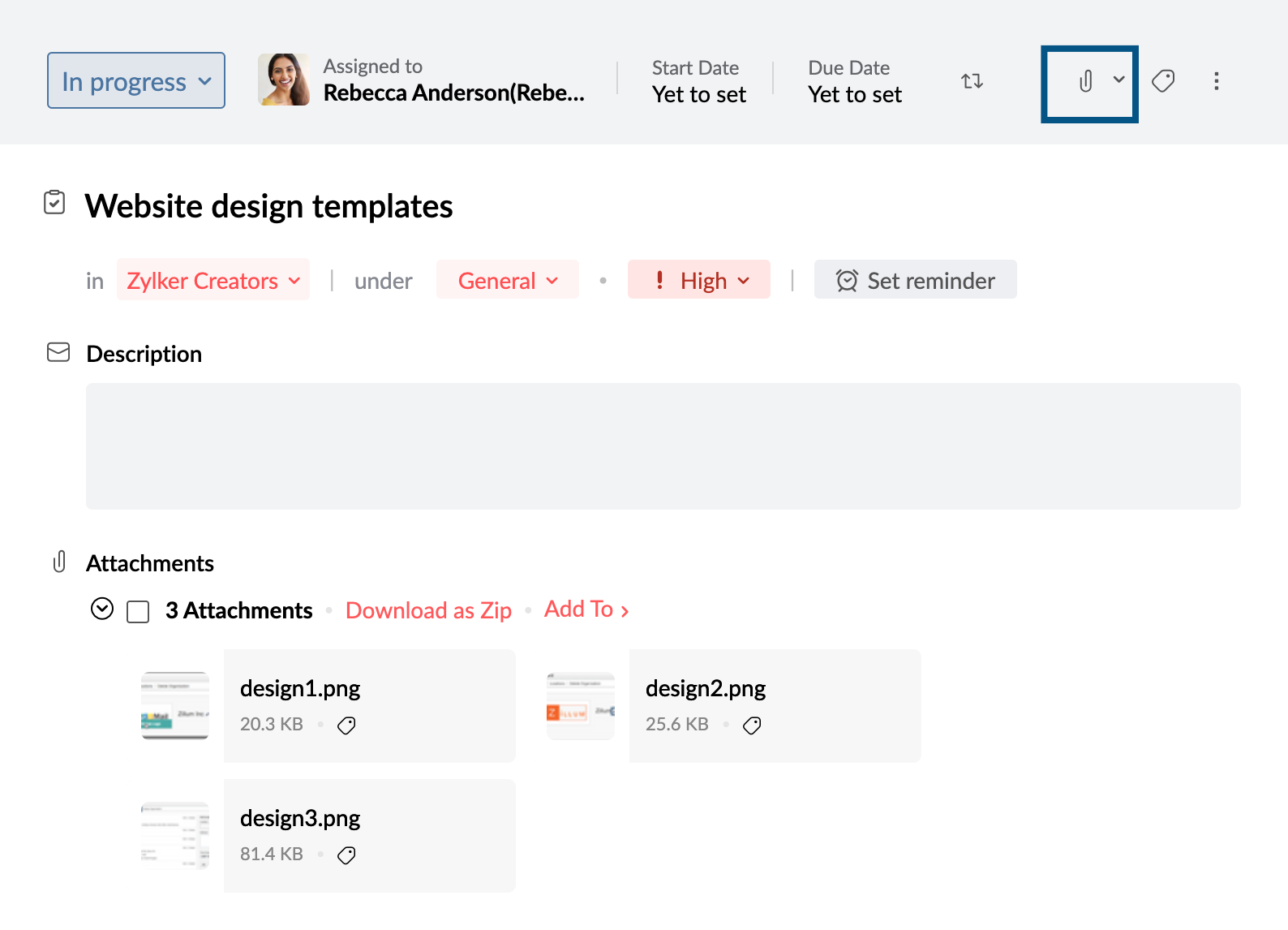
Attachments
Attachments allow you to add supporting files directly to a task. These may include documents, spreadsheets, images, or other materials required to complete the work.
For example, a task involving a marketing campaign could include the content brief, reference designs, and supporting documents. Keeping these files connected to the task makes them easier for authorised participants to locate.
Zoho Mail supports viewing and downloading task attachments, subject to the applicable file and access restrictions. Adding relevant files helps preserve context and reduces the need to search through separate email conversations for supporting materials.
Zoho Mail Tasks, an application available as a part of Zoho Mail Suite, is a one-stop task management tool. When you add your tasks to Zoho Mail, you can assign due dates, set reminders, lay down priorities, and break them down into sub-tasks allowing you to delegate work among your colleagues.
Task Timeline
When you work on a task with multiple assignees, someone might have updated or edited the task. For example, you might spot a new due date, change in the reminder, a different description from what you had initially, or even marked the task complete. In the Timeline—available at the bottom of each task, we note down who updated or edited the task, when the task got updated, and which detail of the task got changed.
The Task Timeline provides a record of changes made to a task, helping users understand how its details have evolved. Depending on the activity, the timeline can include updates to the due date, reminders, description, and completion status.
This is particularly useful when several people collaborate on a task or when deadlines and requirements change during a project.
By reviewing the timeline, authorised users can understand when relevant changes occurred and who made them. This improves transparency, supports accountability, and makes it easier to follow the history of a task without reconstructing events from separate conversations.
