
Advanced IT Analytics: A Complete Guide
Advanced analytics plays a critical role in modern digital enterprises because businesses generate massive amounts of data daily. Without intelligent analysis, valuable insights remain hidden within this data. With advanced analytics platforms, organizations can transform raw data into actionable insights that support operational efficiency and innovation.




What Is Advanced Analytics?
Advanced analytics refers to the use of sophisticated techniques and technologies to analyze data and extract deeper insights beyond basic reporting. Unlike traditional analytics, which mainly focuses on historical data and descriptive reports, advanced analytics uses tools such as machine learning, predictive modeling, statistical analysis, and artificial intelligence to uncover patterns, predict outcomes, and support strategic decision-making.
In the context of IT analytics, advanced analytics helps organizations analyze large volumes of operational data generated from applications, servers, networks, and security systems. By analyzing this data, IT teams can identify performance issues, detect anomalies, forecast system failures, and optimize infrastructure performance.
As businesses move toward data-driven decision-making, advanced analytics has become an essential capability for improving IT performance, managing risks, and enhancing overall business operations.

Benefits of Advanced IT Analytics for Businesses

Advanced IT analytics provides significant benefits for organizations seeking to improve operational efficiency, security, and strategic decision-making. By analyzing large volumes of IT data, businesses gain real-time visibility into system performance and operational trends.
One major benefit is proactive issue detection. Advanced analytics tools can identify anomalies and potential system failures before they impact business operations. This helps IT teams prevent downtime and maintain system reliability.
Another key advantage is improved decision-making. With predictive insights and data-driven recommendations, business leaders can make informed decisions about infrastructure investments, resource allocation, and risk management.
Advanced analytics also improves operational efficiency by automating repetitive data analysis tasks. Instead of manually analyzing system logs and performance reports, IT teams can rely on automated analytics platforms to detect issues and generate insights.
Additionally, advanced analytics strengthens cybersecurity capabilities by detecting unusual patterns in network activity that may indicate security threats.
Ultimately, advanced IT analytics helps organizations optimize IT infrastructure, reduce operational risks, and drive innovation through intelligent data-driven strategies.
Use Cases of Advanced Analytics in IT Operations
Advanced analytics is widely used across IT operations to improve system performance, security, and infrastructure management. By analyzing large datasets generated by IT systems, organizations can identify patterns and make proactive decisions.
One common use case is predictive maintenance. Advanced analytics can analyze server logs and system performance data to predict hardware failures. IT teams can then take preventive actions before disruptions occur.
Another important use case is IT performance monitoring. Analytics platforms continuously monitor network traffic, application performance, and system health to detect anomalies and performance bottlenecks.
Advanced analytics also plays a crucial role in cybersecurity monitoring. By analyzing user behavior and network activity, analytics tools can identify suspicious patterns that may indicate security threats or unauthorized access attempts.
Capacity planning is another key application. Organizations can analyze historical usage data to forecast future infrastructure needs and optimize resource allocation.
Through these use cases, advanced analytics transforms IT operations from reactive problem-solving to proactive performance optimization and strategic planning, ensuring that IT systems support business growth and stability.

Advanced Analytics vs Traditional Analytics
Understanding the difference between advanced analytics and traditional analytics is important for organizations looking to improve their data-driven strategies. Traditional analytics focuses on analyzing historical data to understand what has already happened, while advanced analytics goes a step further by predicting future trends and recommending actions.
| Aspect | Traditional Analytics | Advanced Analytics |
|---|---|---|
| Purpose | Understand past events and historical data | Predict future outcomes and recommend actions |
| Data Analysis | Uses basic statistical analysis and reporting | Uses machine learning, AI, and predictive models |
| Insights | Descriptive insights (what happened) | Predictive and prescriptive insights |
| Complexity | Simple data analysis and dashboards | Complex modeling and pattern recognition |
| Decision Support | Supports reactive decision-making | Enables proactive and strategic decisions |
| Tools Used | Basic BI tools and spreadsheets | AI platforms, machine learning tools, and advanced analytics platforms |
| Business Value | Provides operational visibility | Enables innovation and competitive advantage |
Organizations that rely only on traditional analytics often react to problems after they occur. Advanced analytics enables businesses to anticipate issues, optimize performance, and make smarter decisions.
The Four Types of Advanced Data Analytics
Advanced data analytics can be categorized into four major types. Each type answers a different business question and provides a deeper level of insight.
| Type of Analytics | Description | Key Question Answered |
|---|---|---|
| Descriptive Analytics | Analyzes historical data to understand trends and patterns. | What happened? |
| Diagnostic Analytics | Investigates data to determine the causes of specific outcomes or events. | Uses machine learning, AI, and predictive models |
| Predictive Analytics | Uses statistical models and machine learning to forecast future outcomes. | What is likely to happen? |
| Prescriptive Analytics | Recommends actions based on predictive insights and optimization techniques. | What should we do next? |
Understanding the difference between advanced analytics and traditional analytics is important for organizations looking to improve their data-driven strategies. Traditional analytics focuses on analyzing historical data to understand what has already happened, while advanced analytics goes a step further by predicting future trends and recommending actions.
Key Capabilities and Techniques of Advanced Analytics
Advanced analytics relies on several technologies and techniques that help organizations analyze complex datasets and generate meaningful insights.
| Capability / Technique | Description |
|---|---|
| Machine Learning | Algorithms that learn from data patterns to make predictions and automate analysis. |
| Predictive Modeling | Uses historical data to forecast future events and trends. |
| Data Mining | Identifies hidden patterns and relationships within large datasets. |
| Artificial Intelligence | Enables systems to simulate human intelligence in analyzing data. |
| Statistical Analysis | Uses mathematical models to analyze relationships and trends in data. |
| Natural Language Processing (NLP) | Allows systems to analyze text data and human language. |
| Data Visualization | Converts complex datasets into visual dashboards for easier interpretation. |
Organizations that rely only on traditional analytics often react to problems after they occur. Advanced analytics enables businesses to anticipate issues, optimize performance, and make smarter decisions.
Discover how UEM can streamline your business
Reach out to the FGRADE Concierge Team for a free consultation!
Call Us
+91 916 056 5554
Mail Us
sales@fgrade.com
Conclusion
Advanced IT analytics has become a critical component of modern business intelligence and digital transformation strategies. By leveraging advanced data analysis techniques, organizations can transform raw IT data into actionable insights that improve performance, security, and operational efficiency.
With capabilities such as predictive modeling, machine learning, and data mining, advanced analytics allows IT teams to anticipate system failures, optimize infrastructure resources, and strengthen cybersecurity defenses. As businesses continue to generate massive volumes of data, the ability to extract meaningful insights from that data becomes a major competitive advantage.
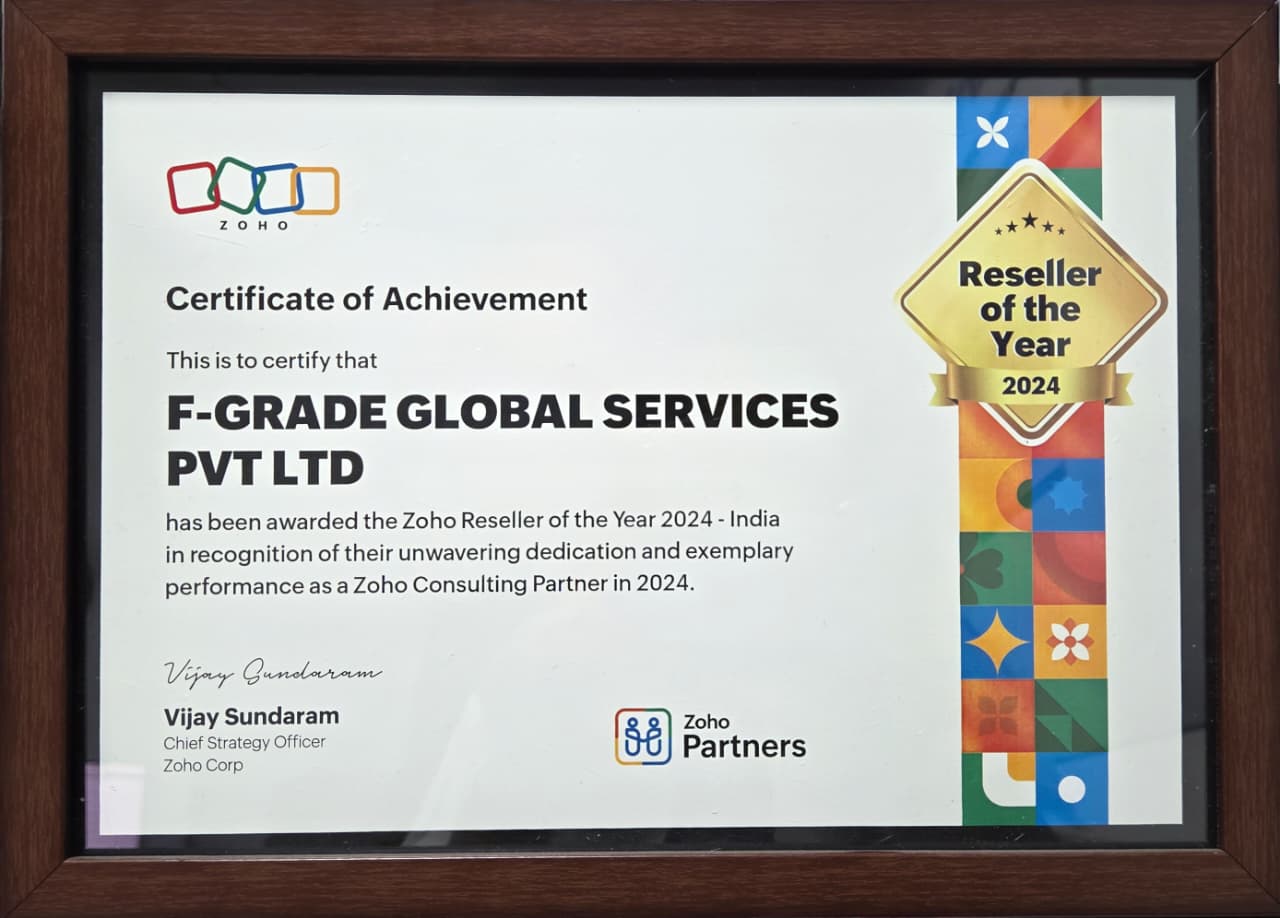
Organizations looking to implement advanced analytics solutions can benefit from expert support and guidance. Fgrade, a certified partner of Zoho and ManageEngine products, helps businesses implement powerful analytics and IT management solutions that enhance operational visibility and performance. With expert deployment and customization, Fgrade enables organizations to unlock the full potential of advanced IT analytics and build smarter, data-driven IT operations.
Why Choose FGrade?
01
Certification and
Expertise
Over 70+ certification and Dedicated certified professionals for every product
02
Configurations & Data Migrations
Handled more than 10000+ configurations & Data Migrations
03
Customer
Support
Addressed 15000+ support tickets with 99% satisfaction rate resolution on both virtual & physical
Frequently Asked Questions
What is advanced analytics?
Advanced analytics refers to the use of sophisticated techniques such as machine learning, predictive modeling, artificial intelligence, and statistical analysis to analyze large datasets and generate predictive insights.
How does advanced analytics differ from traditional analytics?
Traditional analytics focuses on historical reporting and descriptive analysis, while advanced analytics uses predictive models and AI technologies to forecast future outcomes and recommend actions.
What are the four types of advanced analytics?
The four main types of advanced analytics are descriptive analytics, diagnostic analytics, predictive analytics, and prescriptive analytics.
What techniques are used in advanced analytics?
Advanced analytics techniques include machine learning, predictive modeling, data mining, artificial intelligence, statistical analysis, and natural language processing.

Search, compare & buy top business software with FGRADE. Find the best deals on Microsoft 365, Zoho, Google Workspace & more. Shop smart & save big!
Office Address
AWFIS, Ground Floor, DSL abacus it park, Survey Colony, Industrial Development Area, Uppal, Hyderabad, Telangana 500039